CAREERS
AI-Driven Hiring Shift Pushes Indian GCCs to Seek Specialized Talent
MyDigiFolio Editors
2 min read
CAREERS
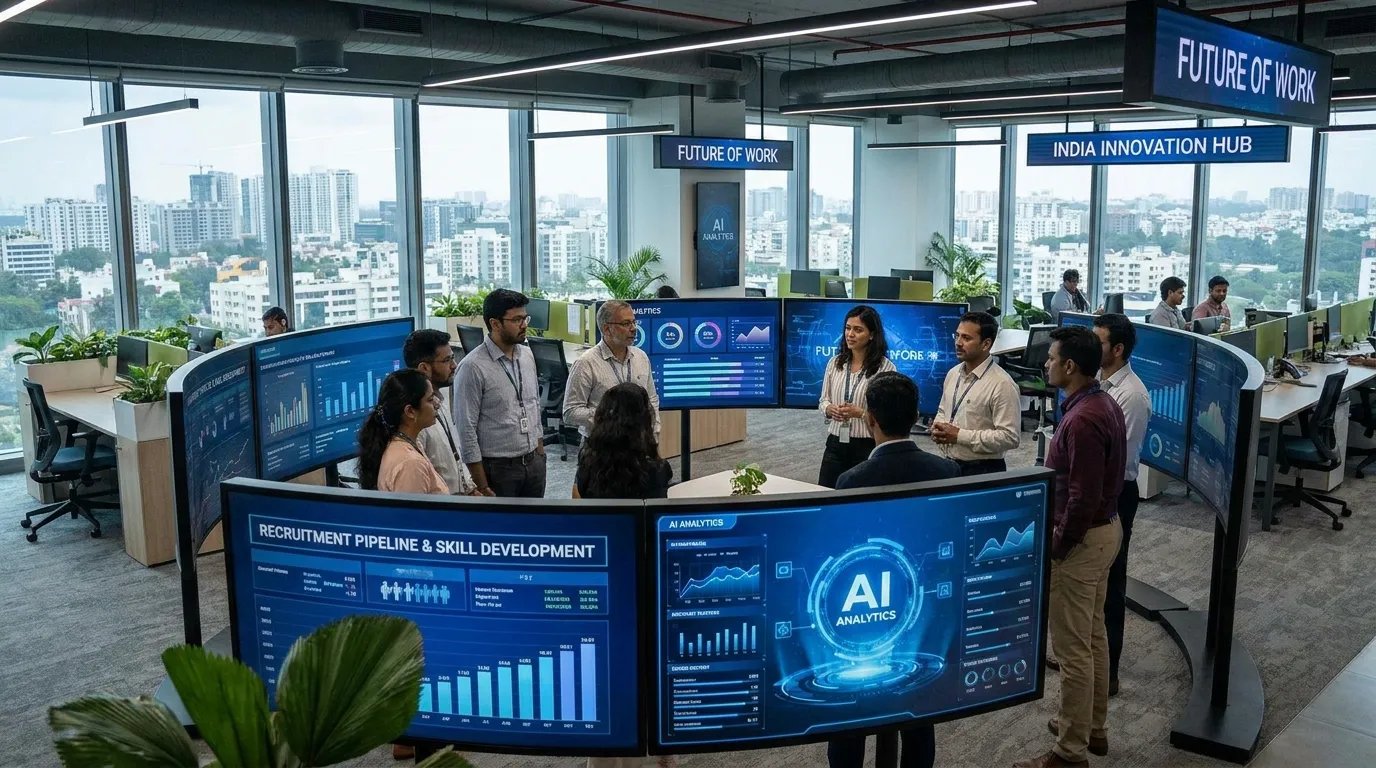
As AI becomes deeply integrated into business operations, companies are prioritizing candidates with advanced technical capabilities over traditional qualifications alone. Industry leaders say the growing demand for AI and cybersecurity expertise is reshaping recruitment across India's GCC ecosystem.
AI Reshapes Talent Requirements in India's GCC Sector
Global capability centers (GCCs) operating in India are becoming increasingly selective in recruitment as artificial intelligence transforms workplace requirements and skill expectations.
Executives from multinational companies and GCCs indicate that hiring activity remains active, but identifying professionals with both technical expertise and the ability to adapt to rapidly evolving technologies has become more challenging.
Industry leaders note that AI is influencing nearly every role, increasing demand for professionals with specialized knowledge in areas such as artificial intelligence, cybersecurity, digital operations, and cloud technologies.
India's GCC sector continues to expand, supported by the country's large talent pool and cost advantages. According to industry estimates, the number of GCCs in India is expected to surpass 2,100 by the end of fiscal 2026, employing more than 2.3 million people and contributing significantly to the economy.
However, organizations report growing competition for highly skilled professionals. Companies seeking advanced capabilities are finding it increasingly difficult to attract and retain niche talent.
The evolving demand has also influenced hiring volumes, with some organizations taking a more cautious approach to workforce expansion while focusing on quality and specialization.
Entry-Level Roles Face Transformation
Business leaders suggest that AI-powered automation may reduce the need for certain routine entry-level positions over the coming years. Employers are increasingly placing greater emphasis on demonstrable AI skills and relevant certifications alongside academic qualifications.
To address emerging talent gaps, companies are investing in upskilling initiatives and working with educational institutions to better align academic programs with industry requirements.
Despite these efforts, concerns remain regarding workforce readiness as organizations continue to report widening skills shortages. Industry experts emphasize that collaboration among businesses, educational institutions, and government bodies will be essential to prepare the workforce for an AI-driven future.
HRM Asia · 10 hours ago
The Philippines is linking workforce reskilling with a major AI infrastructure development plan through 2033. The programme targets 1.3 mill...

Gulf News · 11 hours ago
UAE hospitality hiring remains active, but employers are increasingly looking for a broader mix of skills rather than experience alone. Digi...

Khaleej Times · 11 hours ago
AI is increasingly changing job structures across the UAE and GCC rather than directly eliminating roles. While adoption is growing, many or...
From MyDigiFolio
One profile. Resume, vCard, portfolio, and email signatures — all generated in 3 minutes.
Build your page — freeWe use essential cookies for login and preferences, and optional cookies for analytics. Privacy policy.