CAREERS
AI May Not Cause India’s Jobs Crisis, but Could Widen Existing Gaps
MyDigiFolio Editors
4 min read
CAREERS

India’s employment challenge is increasingly concentrated in the shortage of stable medium-skill opportunities. AI could add pressure to these gaps, making job creation, productivity improvements and occupation-specific AI training increasingly important.
Recent protests by students over examination paper leaks and limited employment opportunities point to a wider problem in India’s labour market. The concern is not simply a lack of jobs, but a shortage of work that provides educated young people with stability, status and opportunities for advancement.
India has seen a significant rise in employment. Between 2018-19 and 2025, the proportion of working-age Indians who were employed increased from 47% to 56.2%, adding an estimated 104 million workers. However, more than 40 million of those workers moved into agriculture, largely through self-employment. This runs against the usual movement away from low-productivity farming as economies develop.
Outside agriculture, services created around 30 million jobs. These included both formal, higher-paying positions as well as lower-paid informal employment.
The bigger gap is in the middle of the skills spectrum. Over the past seven years, wage employment grew most strongly among lower-skilled workers, followed by higher-skilled workers, while growth was weakest in medium-skill occupations. Mining and construction labourers increased by about 14.8 million, while cleaners, helpers and food-preparation assistants added around 4.7 million workers.
Some highly skilled occupations also expanded. Business, finance and sales professionals increased by about 2.7 million, while software, database and network professionals added around 2.4 million. However, occupations such as clerks, technicians, installers, repair workers and production-support staff did not see similar growth.
Pay has also weakened in some medium-skill occupations. Real wages for technicians and associate professionals, including machine operators, laboratory assistants and repair specialists, declined by about 20%. In contrast, professionals recorded real median wage growth of 22.6%, while low-skill occupations saw wage increases of roughly 8-12%.
The economic return from education has also declined. Compared with workers who had not completed Class 8, the wage advantage associated with completing Class 12 was 9 percentage points lower in 2025 than in 2018-19. For college-educated workers, the decline was about 5 percentage points. This suggests that education by itself is becoming less reliable as a pathway to better employment.
Artificial intelligence could intensify these existing differences. Earlier computerisation affected routine and rule-based work by making many tasks easier to automate or outsource. This contributed to pressure on clerical, production and other medium-skill occupations. Generative AI extends these capabilities into tasks such as drafting content, coding, data analysis and customer interaction, which are also part of many cognitive jobs sought by educated workers.
An assessment of 70 Indian occupations using measures of AI capability and the tasks required in those occupations found that software and database professionals, numerical clerks, mathematicians and statisticians, and business and finance professionals are among the occupations with greater exposure to AI. Construction labourers, cleaners, food-preparation assistants, welders and building workers were among those with lower exposure.
The relationship between employment growth and AI exposure also points to pressure on medium-skill occupations. Employment expanded most among occupations with the lowest AI exposure. Highly exposed occupations also grew, although at a slower rate, while employment in moderately exposed occupations showed little movement. Nearly half of the overall increase in non-farm wage employment came from the least-exposed fifth of occupations.
The analysis uses US task data, which may not fully reflect Indian workplaces. However, it indicates where employment adjustment pressures could be concentrated and suggests that waiting for large-scale job losses before responding could be problematic.
By 2036, nearly two-thirds of India’s population is expected to be of working age. The Economic Survey estimates that around 7.85 million non-farm jobs need to be created each year until 2030 to productively absorb the expanding workforce.
The article identifies three key priorities. India needs to expand productive non-farm employment across areas including labour-intensive manufacturing, construction, logistics, healthcare, hospitality and trade. Low-skilled manual work will continue to be important, making improvements in productivity, infrastructure, formal employment arrangements, access to credit and social protection important as well.
Technology-related activities could also generate complementary medium-skill opportunities. Solar installations and EV charging require electricians, installers and maintenance technicians, while automated factories need machine operators, quality-control workers and repair technicians. Healthcare expansion can similarly create demand for nurses and laboratory technicians even as AI supports diagnostic work.
AI training should also be tailored to specific occupations and tasks rather than treated as a single course for everyone. Workers may need to learn how to verify AI-generated analysis, use decision-support tools or combine automated insights with human judgement depending on their occupation.

The Economic Times · 1 day ago
ICICI Life Insurance plans to onboard 20,000 women financial advisors nationwide by the close of FY2027 under its flagship Narishakti initia...

The Times of India · 1 day ago
UCO Bank has announced 530 apprentice positions across India under the Apprentices Act, 1961, with the application window open until October...
The Economic Times · 2 days ago
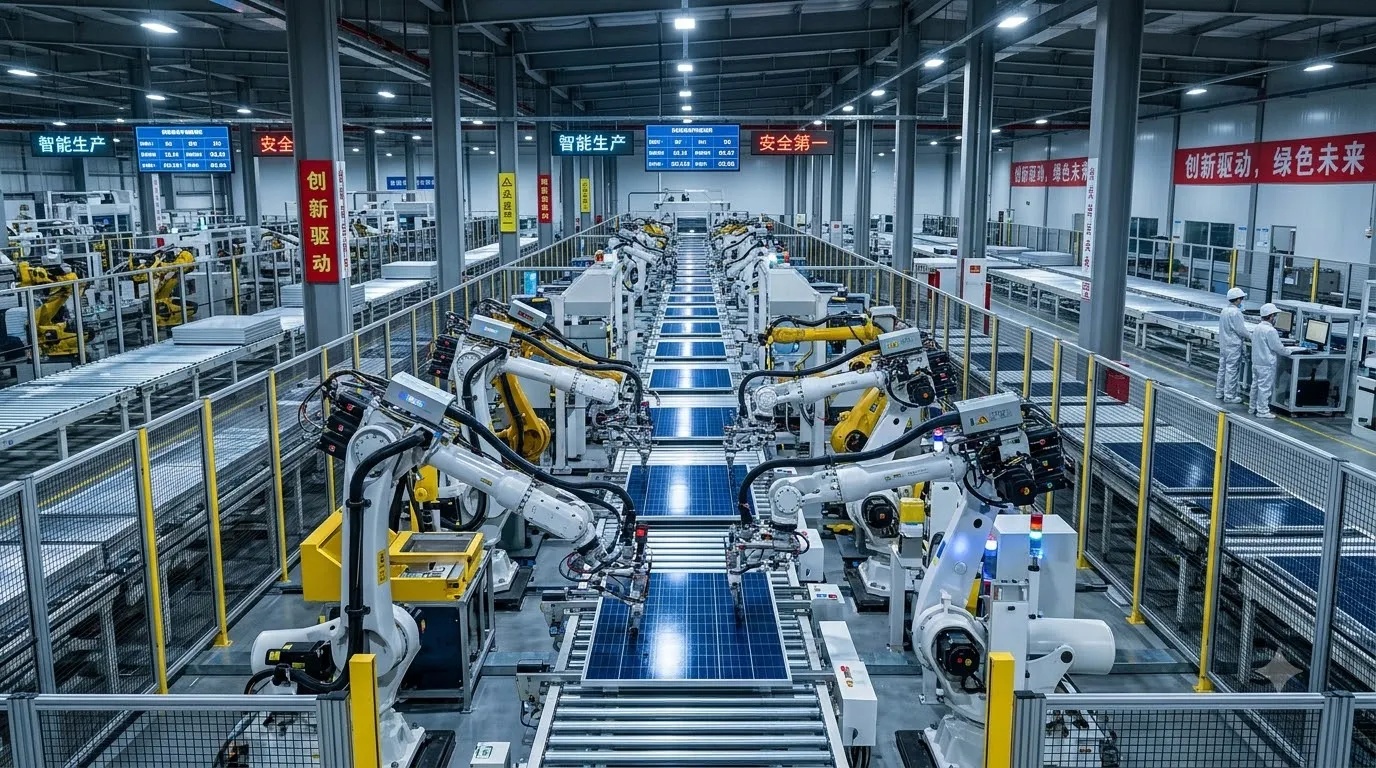
China’s top five solar manufacturers slashed their combined workforce by 21%—shedding 40,589 jobs—as severe domestic overcapacity roughly do...
From MyDigiFolio
One profile. Resume, vCard, portfolio, and email signatures — all generated in 3 minutes.
Build your page — freeWe use essential cookies for login and preferences, and optional cookies for analytics. Privacy policy.