CAREERS
China Workers Face Growing Job Anxiety as AI Spreads Across Industries
MyDigiFolio Editors
3 min read
CAREERS
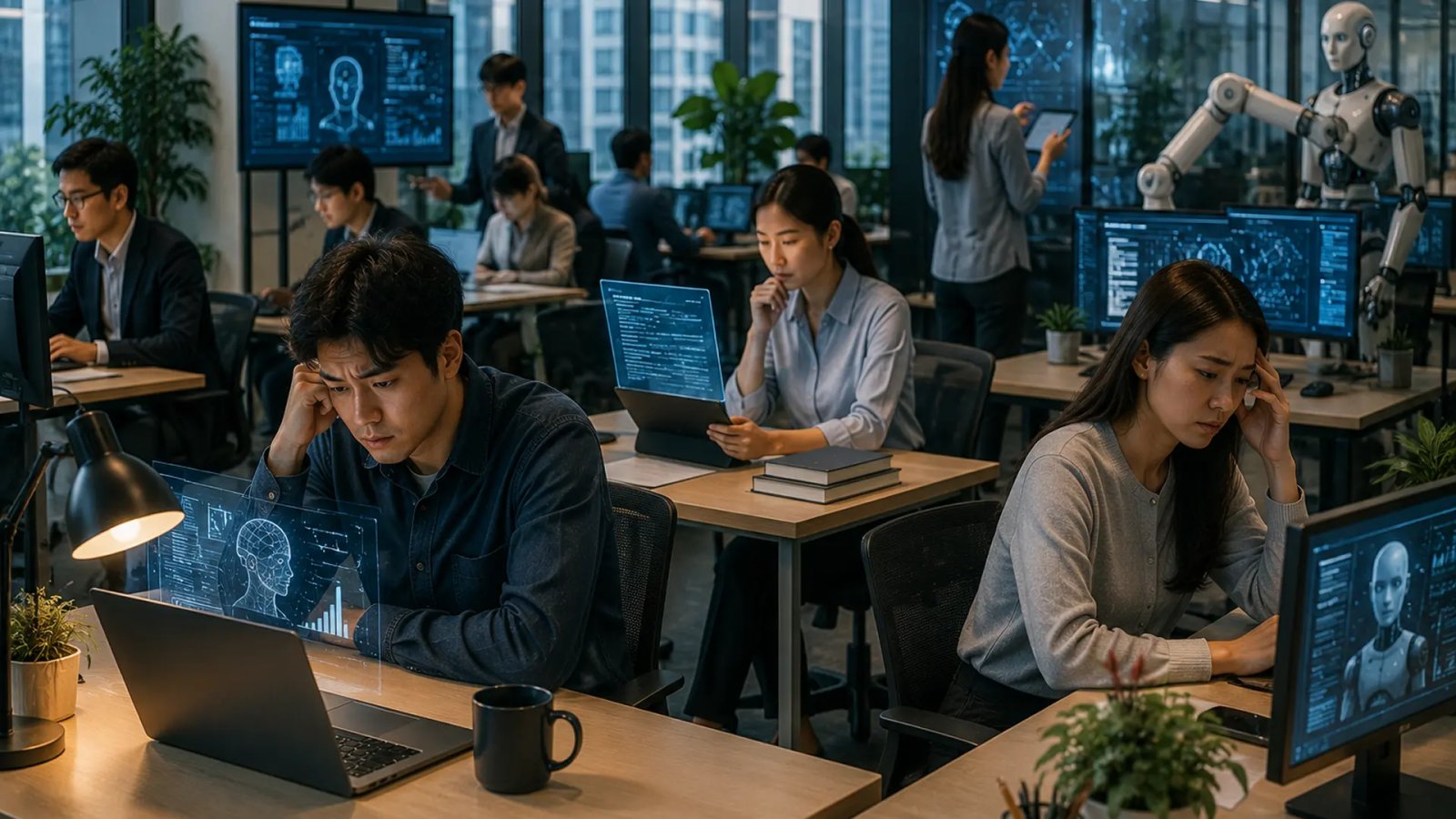
AI adoption is changing China's labor market, creating new opportunities while increasing displacement concerns in several occupations. Workers are responding in different ways, including learning to use AI, moving into independent work and exploring new career options.
Artificial intelligence is rapidly changing China's labor market, with workers in fields ranging from software development and translation to media production and physical tasks facing job losses or concerns about future employment.
One example is Fei Zhaojun, a 40-year-old former programmer in Beijing. His employer questioned whether AI could replace human programmers, and two weeks later Fei was among about 160 employees who lost their jobs. He now spends his career break creating short videos while considering his next step.
China has been moving quickly to adopt AI, supported by government initiatives encouraging the use of AI systems and robotics across industries. The shift has also led some workers to experiment with AI themselves rather than avoid it.
Part-time translator Du Qinchun has helped train an AI translation model, which has temporarily created additional work for him. However, he said pay in the translation industry has fallen by more than half compared with previous years, while foreign-language university programs have also become less popular as AI translation tools spread.
The use of AI among Chinese industrial companies has expanded sharply. According to IDC, the share of industrial enterprises reporting the use of AI models and agents rose to 47.5% last year from 9.6% in 2024.
Robotics is also becoming more common. Humanoid robots are being used on a limited scale to sort parcels in postal facilities, while other systems are being developed for tasks such as traffic direction and coffee preparation. Delivery robots are also expanding, raising concerns about their potential impact on food delivery workers.
AI is also changing China's short-drama industry. Generative AI is increasingly being used in content creation, production and distribution, while Chinese media reports said the number of live-action short and vertical video series declined by about 75% in the first quarter compared with the same period a year earlier.
Experts say workers whose jobs are heavily concentrated in areas such as software development and multimedia production could face greater displacement because AI can now perform tasks that previously required specialized training.
The wider economic impact remains uncertain. China's government is promoting its "AI Plus" initiative and a five-year plan through 2030 to expand AI across industries. While AI could increase productivity, economists warn that rapid adoption may create additional pressure on employment.
China's overall urban unemployment rate is around 5%, while unemployment among people aged 16 to 24, excluding students, is roughly three times higher. At the same time, the country's aging and shrinking population could eventually make automation useful in addressing a smaller workforce.
Some workers are using AI to build new careers. Former scriptwriter Wang Zhicheng left his job after his company reduced its 13-person writing team by about half and began independently creating illustrated children's books. He uses AI for some tasks but believes people still need to decide which AI-generated ideas are worth pursuing.
Others see AI as a useful workplace tool rather than a direct threat. High school chemistry teacher Yang Zheng said students use AI to assist with homework and that its ability to respond to follow-up questions can be useful, although the technology can still make mistakes.

The Economic Times · 1 day ago
ICICI Life Insurance plans to onboard 20,000 women financial advisors nationwide by the close of FY2027 under its flagship Narishakti initia...

The Times of India · 1 day ago
UCO Bank has announced 530 apprentice positions across India under the Apprentices Act, 1961, with the application window open until October...
The Economic Times · 2 days ago
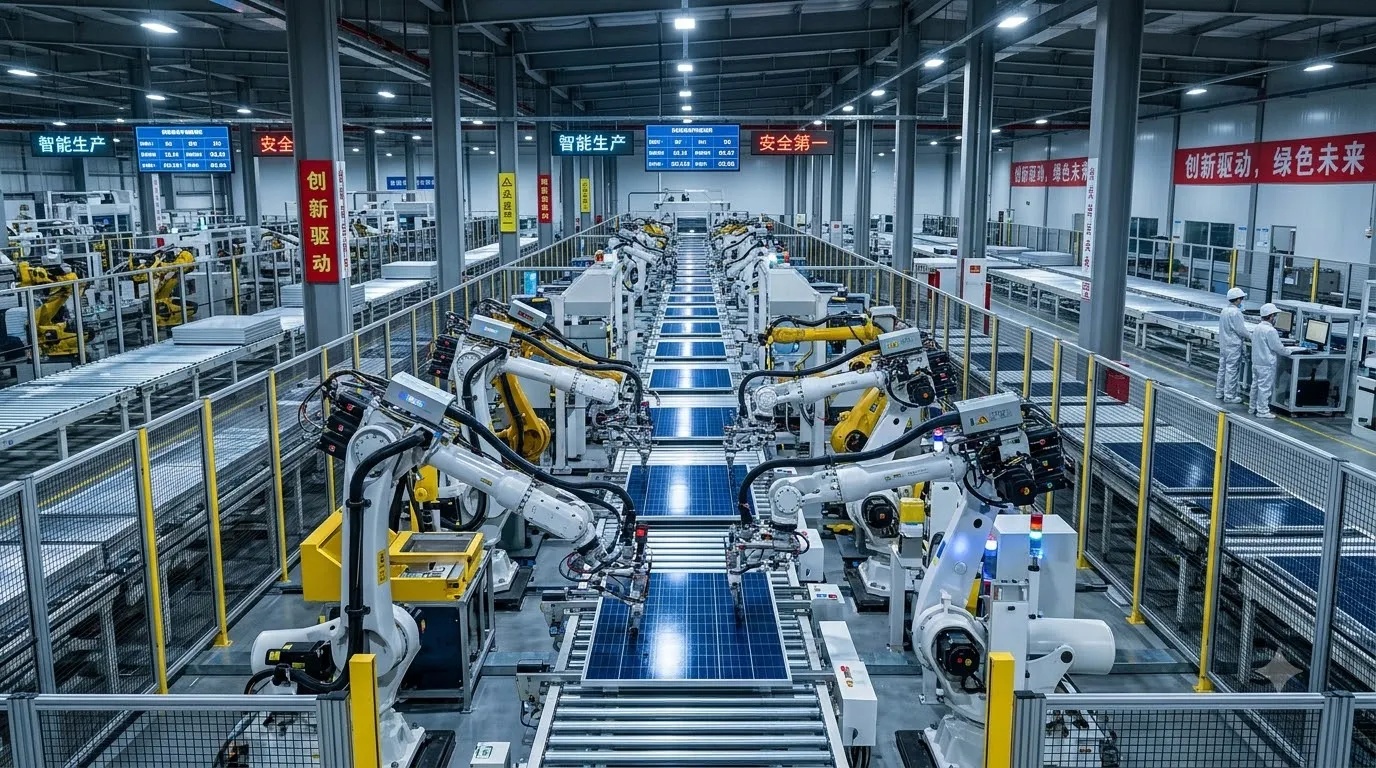
China’s top five solar manufacturers slashed their combined workforce by 21%—shedding 40,589 jobs—as severe domestic overcapacity roughly do...
From MyDigiFolio
One profile. Resume, vCard, portfolio, and email signatures — all generated in 3 minutes.
Build your page — freeWe use essential cookies for login and preferences, and optional cookies for analytics. Privacy policy.