CAREERS
Companies Increasingly Seek T-Shaped Talent as Roles Become More Interconnected
MyDigiFolio Editors
5 min read
CAREERS

The workplace is increasingly moving away from narrowly defined functional roles toward professionals who can combine specialised expertise with knowledge of adjacent areas. AI and cross-functional work are further increasing the need for employees who can adapt, collaborate and contribute beyond their primary function.
For years, professional growth was largely built around specialising in one function. Finance professionals focused on finance, technology professionals developed technical expertise, and HR professionals progressed through increasingly senior HR positions. However, the growing use of artificial intelligence (AI) and closer connections between business functions are changing that model.
Companies are increasingly looking for T-shaped talent — professionals who have strong expertise in one core area while also understanding how their work connects with technology, data, operations, regulation, customers and other parts of the business.
The trend is already visible in hiring. A 2026 ICRIER study found that 63% of firms reported higher demand for candidates who combine domain expertise with AI or data skills. This reflects the T-shaped approach, where employees retain deep knowledge of their primary field while developing capabilities in related areas.
Google Cloud's industry specialists were cited as an example of this approach, combining sector-specific expertise with knowledge of cloud, AI, data and technology.
Technology-driven businesses such as Zomato and Swiggy are also creating roles that require employees to work across areas including restaurant technology, advertising, consumer analytics and e-commerce. At Indian Energy Exchange (IEX), professionals working in power markets may similarly need to understand technology, market operations and regulatory developments alongside their core expertise.
Brijesh Narang, VP-HR at IEX, said the change is not about replacing functional specialists. Instead, employees are expected to maintain deep expertise in their main area while developing an understanding of related functions.
Reena Wahi, Partner and Head of People, Performance and Culture at KPMG in India, said client challenges increasingly involve business, technology, risk, data and industry expertise. She described boundaryless employees as professionals who combine specialised knowledge with an understanding of adjacent disciplines and can work across teams and geographies while continuing to learn.
Gautam Srivastava, Group CHRO at The Phoenix Mills, pointed to similar developments across different sectors. Relationship managers in banking and insurance may need to understand digital systems and compliance along with sales, while hospitality professionals may need to consider areas such as merchandising and retail. Employees in Global Capability Centres can also work across HR, operations and vendor management.
The broader shift does not mean functional expertise is disappearing. Instead, employees are increasingly expected to understand how their responsibilities interact with other functions.
A software engineer, for example, may need to understand the business problem behind a product. An HR professional involved in AI adoption may need knowledge of technology and workforce planning, while a market specialist may need to understand data and regulatory considerations.
Hiring Is Moving Towards Broader Capabilities
The changing nature of work is also influencing how companies assess candidates. Although job descriptions may appear similar to those used previously, organisations increasingly expect employees to work across functions and bring more than one area of expertise.
Dr Sujiv Nair, Chief People Officer at MSN Labs, said exposure to multiple functions or operations, including through cross-functional projects, is preferred, particularly for junior and mid-management positions.
Narang said recruitment is increasingly focusing on capabilities rather than qualifications alone. While a degree provides a foundation, workplace readiness also depends on how effectively candidates can apply their knowledge.
At IEX, for instance, professionals need to understand the links between technology, markets, regulation and operations because decisions in one area can affect another.
Srivastava noted that qualifications do not always show how effectively someone can perform in a practical environment. He cited examples of candidates with strong academic or professional profiles who struggled with real customers, while some candidates with more modest qualifications demonstrated strong service capabilities.
This has increased attention on factors such as attitude and hands-on ability. Dr Amit Singh, CHRO (India II) at Aster DM Quality Care, said that while a degree and previous job title remain relevant, they do not provide a complete picture of a candidate.
The article also cites McKinsey research showing that skills-based hiring adoption increased from 40% of companies in 2020 to 60% in 2024.
As a result, employers are increasingly considering how candidates think, learn and adapt. Their ability to solve unfamiliar problems, collaborate with different teams, communicate beyond their own specialisation and adjust as responsibilities change is becoming important.
Certain specialised healthcare and technical positions continue to require specific qualifications and credentials. Outside such roles, however, transferable skills and learning agility are receiving greater attention.
The shift also means organisations are changing the design of jobs themselves, rather than simply looking for different candidates. Instead of isolated functional roles, workplaces are increasingly built around interconnected teams.
This creates a need for employees to understand the points where different functions meet, while employers may need to rethink job descriptions created for a less interconnected workplace.
AI Could Further Reduce Functional Boundaries
AI could make traditional boundaries between functions less pronounced by giving employees greater access to information, insights and capabilities.
According to Wahi of KPMG, employees can increasingly use AI tools for tasks that previously required specialised support from different functions, potentially allowing faster decisions and greater collaboration.
Srivastava said AI is already taking over repetitive activities such as data entry, first-draft reports and routine analysis across sectors including banking, insurance, hospitality and Global Capability Centres. This leaves employees with greater emphasis on judgement and connecting work across teams.
The growing importance of T-shaped talent therefore reflects a broader change in how work is organised. Employees may need to look beyond their own responsibilities and understand the wider work connected to their role.
While job titles continue to indicate an employee's position within an organisation, they may increasingly provide less information about the range of areas where that employee can contribute.

Business Today · 7 hours ago
The discussion around leadership is increasingly looking beyond English fluency as a measure of capability. The experience shared by executi...
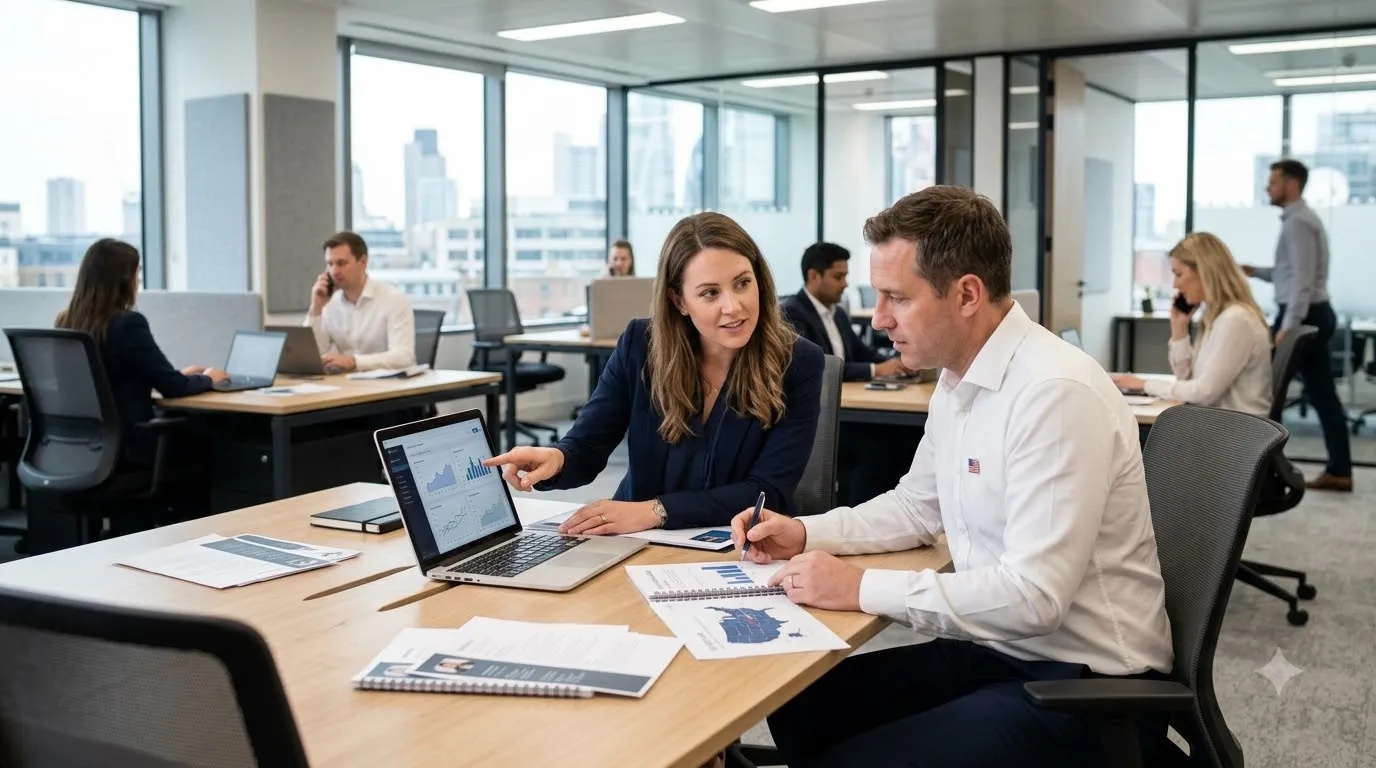
Reuters · 7 hours ago
SThree lifted its annual pretax profit outlook to around £12 million from £10 million, helped by cost-cutting measures and U.S. market growt...
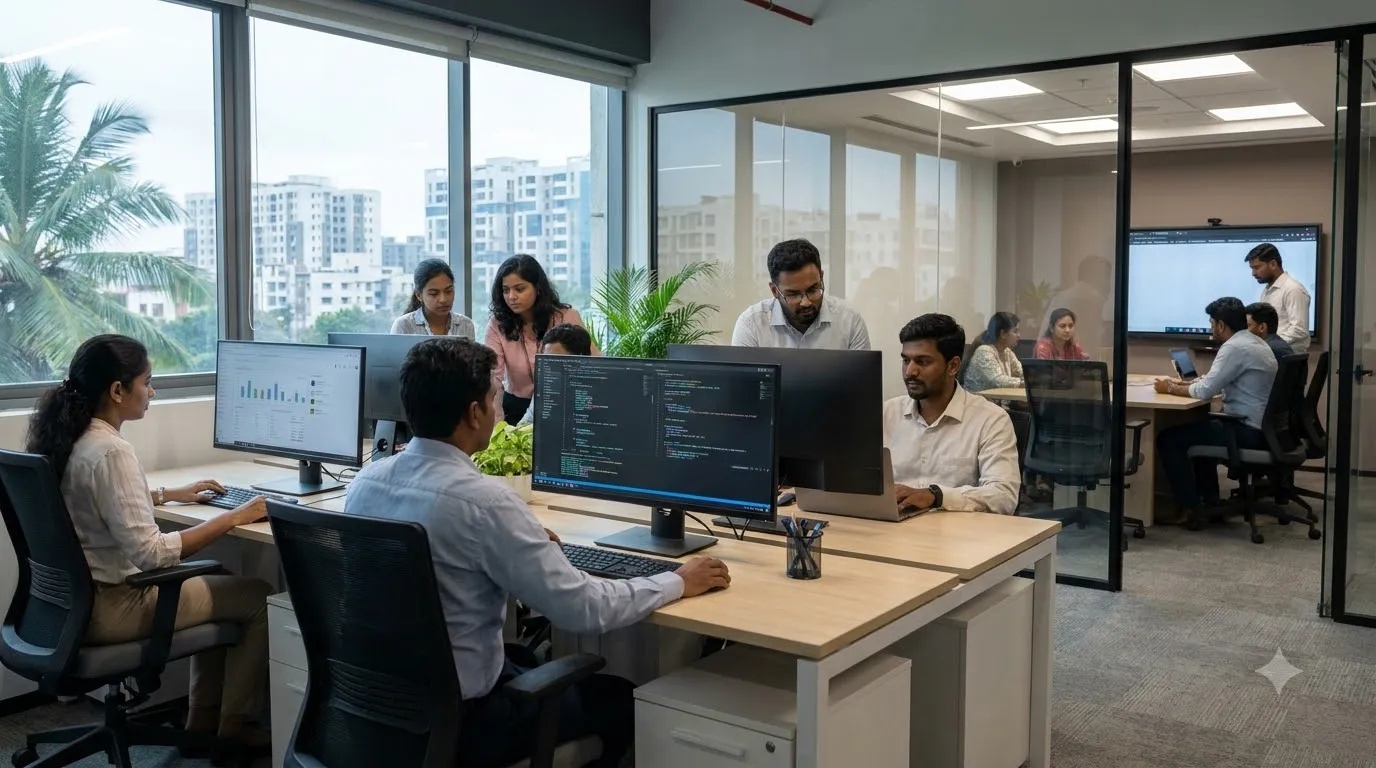
Reuters · 1 day ago
Starbucks has partnered with the Tamil Nadu government to establish a global capability centre in Chennai and plans to hire about 800 techno...
From MyDigiFolio
One profile. Resume, vCard, portfolio, and email signatures — all generated in 3 minutes.
Build your page — freeWe use essential cookies for login and preferences, and optional cookies for analytics. Privacy policy.