AI & TECH
AI to Slow Office Job Growth in New Zealand, but Employment and Demand Expected to Rise
MyDigiFolio Editors
3 min read
AI & TECH

AI is expected to moderate office employment growth in New Zealand rather than reverse it. CBRE's analysis suggests AI will primarily augment office work, while markets with more administrative and support roles could face greater effects than those dominated by professional and client-facing jobs.
Artificial intelligence adoption is expected to reduce the pace of office-based employment growth in New Zealand, but it is unlikely to cause an overall decline in office jobs or demand for office space, according to new analysis from CBRE Research.
The study, titled Investigations of potential AI impacts on office employment and demand, examined different AI adoption scenarios across two Auckland office markets: the central business district and a suburban commercial centre. The analysis was conducted over the three months to June 2026.
Office-based employment continued to increase under every scenario examined. Growth could reach up to 0.9% annually with AI adoption, compared with approximately 1.3% annual growth in a scenario without AI.
CBRE New Zealand Head of Research Zoltan Moricz said concerns about widespread AI-driven losses in office-based employment may be overstated. The research indicates that while AI could reduce the pace of employment growth, it is unlikely to result in broad automation or a major decline in employment and office space requirements.
The analysis also found that AI is more likely to support and enhance office work than completely replace it. Increased productivity and efficiency could improve business profitability and, in turn, support demand for higher-quality office space by making rents more affordable for businesses.
CBRE analysed 2.7 million jobs across New Zealand and found that around 4% are highly exposed to AI-driven automation, while 32% are highly exposed to AI augmentation.
The research noted that measures of occupational AI exposure can sometimes overstate the extent to which jobs can realistically be automated. CBRE's task-level assessment, for example, found that AI could practically cover about 30% of the tasks performed by lawyers, compared with a much higher theoretical exposure level identified in other research.
AI's impact is also expected to vary between office markets depending on the types of jobs concentrated in each location. Areas with more back-office, administrative and support functions could experience greater effects on employment growth and office demand. Markets with more head-office, client-facing and professional roles, such as central business districts, are expected to experience a smaller impact.
CBRE estimates the difference in employment growth between these types of markets could be around 0.3 percentage points annually.
The analysis also suggests that slower employment growth may have a smaller effect on office demand than in the past. The long-standing gap between white-collar employment growth and office take-up is showing signs of stabilising after the two measures diverged significantly following around 2010.
According to CBRE, even with AI reducing the pace of employment growth, a greater share of that growth could continue to translate into demand for office space as AI adoption moves into a more mature phase.
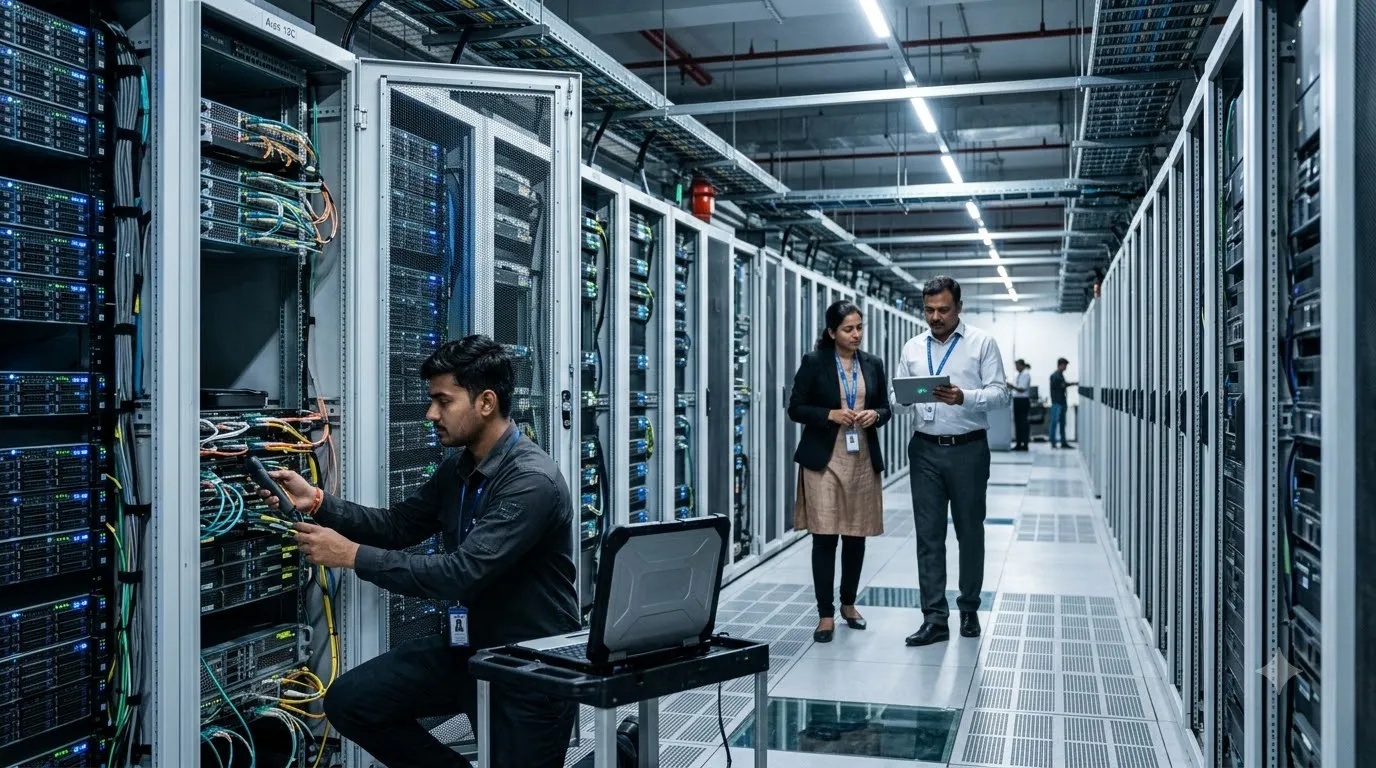
Analytics India Magazine · 3 weeks ago
India’s data centre expansion is broadening employment demand beyond software and other traditional technology roles. The latest hiring data...

GlobeNewswire · 3 weeks ago
Paychex has expanded its WISE AI platform with WISE Hire, bringing AI-powered automation to recruiting and hiring workflows. The solution co...

Reuters · 3 weeks ago
Verizon is expanding its investment in AI workforce training to support job seekers, small businesses and educators across the U.S. The init...
From MyDigiFolio
One profile. Resume, vCard, portfolio, and email signatures — all generated in 3 minutes.
Build your page — freeWe use essential cookies for login and preferences, and optional cookies for analytics. Privacy policy.